
Disclosure: This post contains affiliate links. I may earn a small commission at no extra cost to you. Learn more
These are our favorite math board games for kids from preschool through 5th grade – tested, played to death, and genuinely loved by our family.

Hand your kid a math worksheet and watch their eyes glaze over. But pull out a board game? Suddenly, they’re begging to practice addition.
Teaching young kids problem-solving and math processes from the book can sometimes be tedious. However, with a little creativity and fun, you can make math easy to learn!
A study published in Early Childhood Research Quarterly found that kids who played number-based board games showed significant improvement in number line estimation, counting, and number recognition compared to kids who didn’t. Translation: board games really do make kids better at math.
We’ve played a lot of math board games in our house. Some were huge hits. Some collected dust after a single round. What you’ll find below are the 17 best math board games for kids that have actually survived the ultimate test – our kids wanting to play them again.
Whether you’re a homeschool family looking for a fun way to practice math facts, a parent who wants to sneak in some learning on family game night, or a teacher searching for classroom-friendly options, we’ve organized everything by grade level so you can skip straight to what works for your kid.
| If you are in a hurry … 💡 Check out the top 17 best math games for kids! |
How We Chose These Games
Not every “educational” game earns a spot on this list. Here’s what we looked for:
Actually fun. If kids don’t want to play it more than once, it doesn’t matter how educational it is. Every game here has been requested again by at least one kid in our family.
Tested with real kids. These aren’t just games we found with great customer reviews. We’ve played these with our own kids and in our homeschool community. Some have been in our rotation for years.
Teaches real math skills. We ensured each game targets specific, grade-appropriate skills – counting, addition, multiplication, mental math – not just vaguely “educational” concepts.
Durable enough for repeated play. Cheap cards that rip after three uses? No thanks. These games are built to survive enthusiastic little hands.
Best Math Board Games for Preschool (Ages 3–5)
Little kids are never too young to start building number sense. The games in this section focus on counting, number recognition, and basic concepts, wrapped in themes that preschoolers care about.
Count Your Chickens

Math Skill Focus: Counting, Pattern Recognition, Cooperation
How to Play: Count Your Chickens has the players work together to help Momma Hen gather her baby chicks before she reaches the coop. Spin the spinner, move Momma Hen, and collect the matching number of chick tokens. It’s cooperative and helps kids learn important social development skills.
Why Kids Love It: There’s something about collecting adorable little chicks that makes this game irresistible for preschoolers. My 3-year-old didn’t fully grasp the rules at first, but she was counting chicks out loud within a few rounds. That’s a win.
Players: 2–4 | Ages: 3+
Hi Ho! Cherry-O

Math Skill Focus: Addition, Subtraction, Counting to 10
How to Play: Each player has a tree with 10 cherries. Spin the spinner to find out how many cherries to pick and drop into your bucket. Land on a dog, bird, or spilled bucket? Those cherries go right back on the tree. First to fill their bucket wins.
Why Kids Love It: The physical act of picking and placing cherries makes this board game incredibly tactile and satisfying for little hands. Plus, the “spilled bucket” drama never gets old. (Expect some theatrical groaning.)
Kids practice adding and subtracting without even thinking about it. It’s one of those classic math board games for kids that has earned its spot for decades.
Players: 2–4 | Ages: 3+
The Ladybug Game
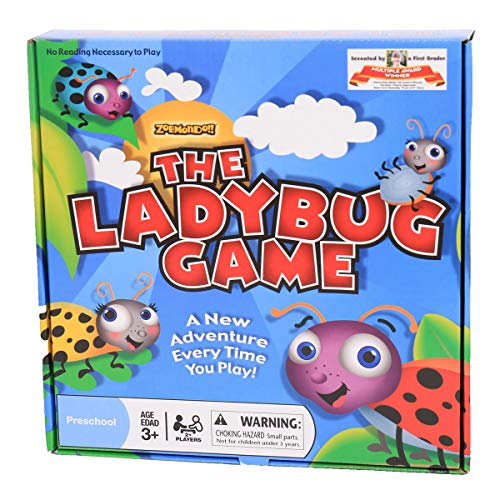
Math Skill Focus: Counting, Number Recognition
How to Play: Draw a card from the deck to move your ladybug along the path toward home. Along the way, collect aphids to feed the lazy ants. First ladybug home wins!
Why Kids Love It: The Ladybug Game theme is adorable, and the gameplay is simple enough that preschoolers can play with very little help. It’s a sneaky way to practice counting and number recognition while your kid thinks they’re just playing with cute bugs.
Players: 2–4 | Ages: 3+
First Orchard

Math Skill Focus: Counting, Color Recognition, Cooperation
How to Play: Roll the die to see which colored fruit to pick from the trees. Collect all the fruit before the raven reaches the garden gate! It’s cooperative, so everyone works together, and the chunky wooden fruit pieces are perfectly sized for toddler hands.
Why Kids Love It: This is one of the very first board games many families try, and for good reason. The pieces are cute, the rules are simple, and the “will the raven get there first?” tension is surprisingly gripping for a game aimed at 2-year-olds. Counting fruit and matching colors build early math skills with no pressure.
Players: 1–4 | Ages: 2+
Best Math Board Games for Kindergarten (Ages 5–6)
Kindergarteners are ready for a step up – games that introduce number sense, basic addition, and the thrill of rolling dice. These picks hit that sweet spot where kids feel challenged but not frustrated.
Zingo!

Math Skill Focus: Counting, Number Sense, Word Recognition, Addition
How to Play: Think Bingo, but with a math twist and a satisfying “zinger” device that spits out number tiles. Match the tiles to the images on your card. First to fill their card wins!
Why Kids Love It: Kids get so excited sliding the zinger mechanism back and forth. The green side of the boards focuses on counting and number recognition, while the red side introduces addition, so this game grows with your kid from preschool through early elementary.
Know what’s wild? My son played Zingo! for a solid year before moving to the addition side, and by the time he did, he barely needed help. The repetition from the counting side had already built his number sense.
Players: 2–6 | Ages: 4+
Clumsy Thief Junior
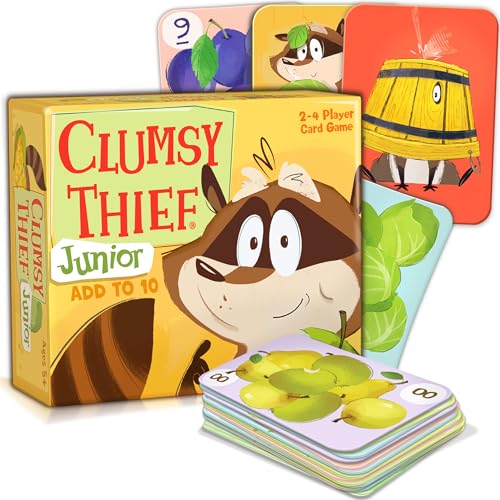
Math Skill Focus: Counting, Addition Facts to 10
How to Play: Players race to pair number cards that add up to 10. Spot a pair in your hand? Slap them down. See a pair on someone else’s pile? Steal it! The player with the most pairs when the cards run out wins.
Why Kids Love It: The stealing mechanic makes this game surprisingly intense for a kindergarten card game. Kids get fired up about “robbing” each other’s stacks, and before they know it, they’ve memorized their addition facts to 10.
Clumsy Thief Junior was a staple in our homeschool for years. Now that my kids have outgrown it, we passed it along to another homeschool family, and I keep hearing about how much they love it!
Players: 2–4 | Ages: 5+
Tenzi Game
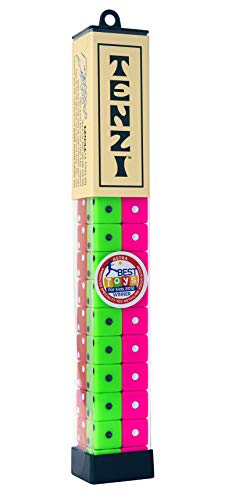
Math Skill Focus: Number Recognition, Counting, Pattern Recognition, Addition, Subtraction, Multiplication
How to Play: Each player gets 10 dice of the same color. Everyone rolls at the same time, sets aside matching numbers, and keeps rolling until all 10 dice show the same number. The first to arrive yells, “TENZI!”
Why Kids Love It: The simultaneous rolling creates this chaotic, noisy, wonderful energy. It’s fast, it’s exciting, and there are dozens of game variations you can play with the same set of dice. We’ve used Tenzi for everything from basic counting to multiplication practice.
Check out my review of the Tenzi Dice Game to see what other ways you can use Tenzi to teach your kids math!
Players: 2–4 | Ages: 5+
Number Hunter
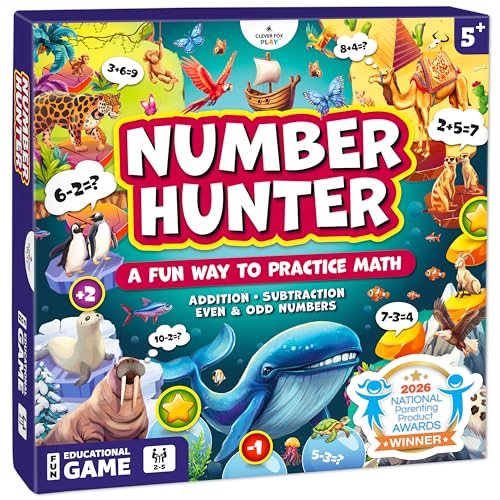
Math Skill Focus: Number Sense, Pattern Recognition, Logical Thinking, Problem-Solving
How to Play: Everyone starts at the same spot on the board. On your turn, roll all three dice together – two number dice and one operation die. The operation die tells you whether to add or subtract, then you move forward that many spaces. Land on a star? Draw a challenge card and answer a bonus math question. The first one to cross the finish line wins.
Why Kids Love It: The “world explorer” theme makes this feel like an adventure game rather than math practice. My kids got genuinely competitive trying to land on star spaces for the challenge cards. They actually wanted more math problems.
The operation die is a clever touch because you never know if you’ll be adding or subtracting, which keeps everyone on their toes. And the three-dice mechanic means even young players who are still building confidence get plenty of low-pressure mental math reps every single turn.
Players: 2-5 | Ages: 4-8
Best Math Board Games for 1st–2nd Grade (Ages 6–8)
By first and second grade, students are ready to advance. These math games for elementary students focus on building fluency with addition and subtraction – the skills that tend to come home on homework sheets but are way more fun to practice on game night.
Sum Swamp

Math Skill Focus: Addition, Subtraction, Odd & Even Numbers
How to Play: Roll the dice to create addition and subtraction equations, then move your game piece through the swamp based on the answer. Watch out for endless loops and shortcuts along the way!
Why Kids Love It: The swamp theme is silly and fun, and the gameplay loop of rolling, solving, and moving keeps things engaging. It’s straightforward enough that first graders can play independently, but the math gets repetitive enough (in a good way) that it really drills those basic facts.
My kids will dodge math worksheets like they’re dodging chores, but they’ll play Sum Swamp for an hour straight. Go figure.
Players: 2–4 | Ages: 5+
I Sea 10!

Math Skill Focus: Addition, Making 10 Combinations
How to Play: Flip cards from the ocean-themed deck and race to spot number pairs that add up to 10. See a match? Shout “I Sea 10!” and grab the cards. But watch out for sharks, they make you start over!
Why Kids Love It: The speed element turns basic addition into something genuinely exciting. And the shark cards add just enough “oh no!” moments to keep everyone on their toes. This game is fantastic for building fluency with addition combinations that make 10, one of the most important math milestones in early elementary.
Once your kid masters making 10, flip the rules. Challenge them to make 15, or subtract instead of add. This simple game is way more adaptable than it looks.
Players: 2–4 | Ages: 6+
Fish Stix

Math Skill Focus: Counting, Graphing and Categorizing, Pattern Recognition
How to Play: Similar to dominoes but with colorful fish. Place cards to match fish swimming in the same direction, and score points for lining up matching patterns. First to mark off all their fish wins.
Why Kids Love It: The strategy element here is sneakily deep. Kids start by just matching fish, but pretty soon they’re thinking two or three moves ahead. It’s simple enough for a 5-year-old with some help, but engaging enough that older siblings (and parents!) won’t be bored.
If you have multiple kids of different ages, Fish Stix is one of the few games everyone can actually play together without the younger ones melting down. That alone earns it a spot on this list.
Players: 2–4 | Ages: 6+
Mobi Math Whale
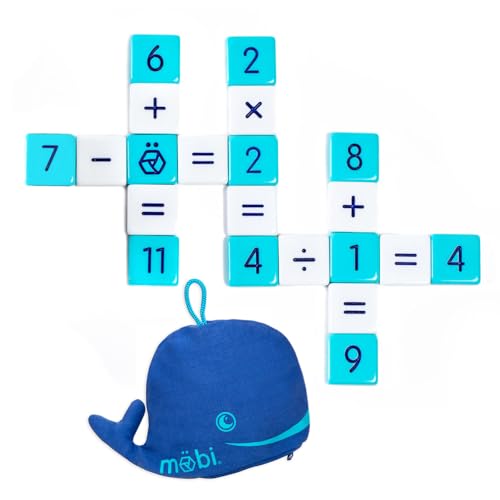
Math Skill Focus: Addition, Subtraction, Multiplication, Division
How to Play: Think Scrabble, but with math. Players draw number and operation tiles from the adorable whale-shaped pouch, then race to build interconnected math equations in a crossword-style grid. First to use all their tiles wins!
Why Kids Love It: That whale pouch alone is enough to hook kids. But the real magic is how the game scales. Early players can stick to simple addition. As they grow, they naturally begin to build multiplication and division equations. It’s fast-paced, slightly competitive, and surprisingly addictive.
We have loved Mobi for years now. Check out our detailed review here.
Players: 1–6 | Ages: 6+
Best Math Board Games for 3rd–5th Grade (Ages 8–11)
Older elementary kids need math games that actually challenge them. The games below go beyond basic addition into multiplication, division, mental math, and multi-step problem solving – the stuff that makes math click for kids who are ready for more.
Clumsy Thief
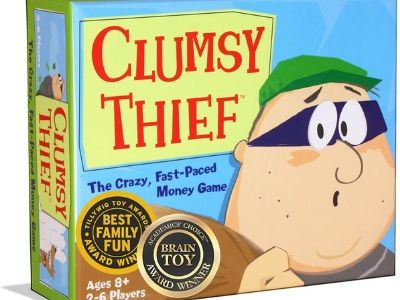
Math Skill Focus: Speed Math, Addition to 100
How to Play: Race to create money stacks that add up to exactly $100. Combine cards from your hand or steal other players’ stacks by playing the right card on top. The player with the most money when the deck runs out wins.
Why Kids Love It: If your younger kids loved Clumsy Thief Junior, the big-kid version cranks the intensity way up. The math is harder (adding to 100 instead of 10), the pace is faster, and the stealing is ruthless. My kids get genuinely competitive with this one, and that’s exactly when the mental math starts flying.
Players: 2–6 | Ages: 8+
Zeus on the Loose
No products found.Math Skill Focus: Addition, Subtraction, Counting in Multiples of 10, Mental Math
How to Play: Players take turns playing number cards to build a running total toward 100 (Mount Olympus). Play strategically to land on multiples of 10 and snatch the Zeus figurine. Special Greek god cards let you manipulate the total – Hermes swaps digits (35 becomes 53), Aphrodite rounds to the nearest 10. The player holding Zeus when the total hits 100 wins!
Why Kids Love It: The Greek mythology theme is a huge draw, and the strategy of when to play power cards adds real depth. This game builds mental math skills like nothing else – kids are constantly adding, tracking running totals, and calculating which card to play. All without a single worksheet in sight.
Players: 2–5 | Ages: 8+
Proof!
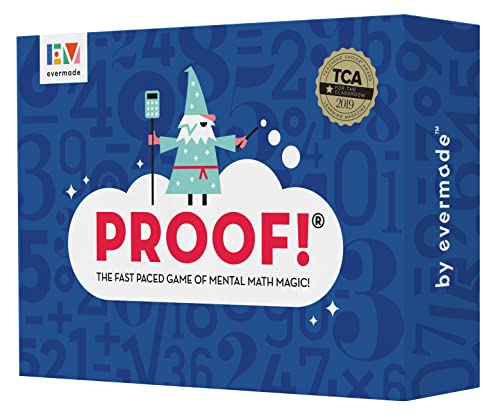
Math Skill Focus: Addition, Subtraction, Multiplication, Division, Creative Problem Solving
How to Play: Nine number cards are laid out face-up. Players race to find hidden equations among the numbers – any combination of three cards where two cards and an operation equal the third. Spot one? Call out “Proof!” and claim the cards.
Why Kids Love It: This is one of those rare games where math genuinely feels like a puzzle. Children start scanning for simple addition equations and gradually begin spotting multiplication and division relationships as well. It rewards creative thinking, not just speed; there are always more equations hiding than you think.
Players: 2–6 | Ages: 9+
Monster Sock Factory

Math Skill Focus: Multiplication, Skip Counting
How to Play: Help cute monsters pack socks! The center card shows a target number, and players lay down combinations of monster cards (with different numbers of legs) that multiply to match it. For example, if the target is 15, play three 5-legged monsters or five 3-legged monsters.
Why Kids Love It: The monster theme is silly and fun, and the multiplication practice is built right into the gameplay mechanic. It’s cooperative, so kids can help each other figure out the combinations, which actually makes it great for mixed-ability groups.
This game aligns with both Common Core and Singapore Math standards, making it a solid pick for homeschool families and classrooms alike.
Players: 2–4 | Ages: 7+
Math for Love Prime Club
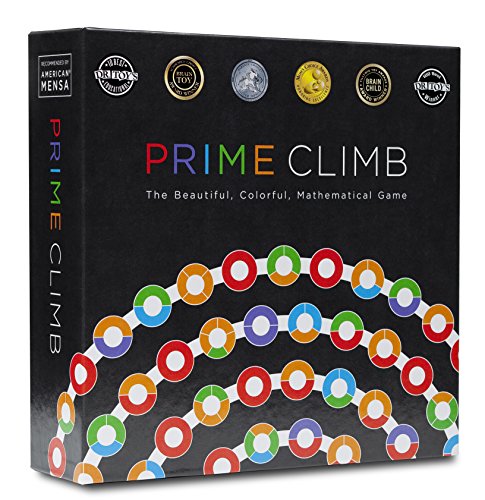
Math Skill Focus: Addition, Subtraction, Division, Multiplication, Number Properties, Strategic Thinking
How to Play: Roll the dice and use addition, subtraction, multiplication, or division to move your two pawns from 0 to exactly 101. The board is color-coded by prime factorization, and special Prime cards add bonus moves. Land on another player’s space to bump them back to start!
Why Kids Love It: Prime Climb is honestly one of the most beautiful board games we own, math or otherwise. The color-coding helps kids intuitively understand prime numbers and factorization without a single lecture. And the strategy of choosing which operation to use each turn makes every decision feel meaningful.
If your kids are anything like mine, they’ll want to play “just one more round” of Prime Climb every single time.
Players: 2–4 | Ages: 8+
What Math Skills Should Your Kid Be Working On?
Not sure which games match your child’s current level? Here’s a quick breakdown of what math skills are typically developing at each stage. (Don’t stress if your kid isn’t hitting every benchmark – they all develop at different speeds.)
Preschool (Ages 3–5)
At this age, kids are building the foundations. They’re learning to recognize numbers, count objects, identify shapes and colors, and begin connecting quantities to real-life situations (“I want TWO cookies!”).
Great ways to reinforce these skills: count out loud together, sort toys by color or size, read counting books, and play games like Count Your Chickens and First Orchard.
Kindergarten (Ages 5–6)
Kindergarteners are solidifying number recognition, learning to count to 100, and starting to understand basic addition and subtraction with small numbers. They’re also beginning to compare quantities (more, less, equal).
Games like Zingo!, Clumsy Thief Junior, and Tenzi are well-suited to this stage because they help make these foundational skills automatic through repetition.
1st–2nd Grade (Ages 6–8)
This is when addition and subtraction fluency really matters. Kids are also starting to understand place value, telling time, measuring, and the early building blocks of multiplication (skip counting, arrays).
Games like Sum Swamp, I Sea 10!, and Mobi Math give kids tons of practice with these operations in a low-pressure way.
3rd–5th Grade (Ages 8–11)
Older elementary kids are tackling multiplication, division, fractions, and multi-step problems. Mental math becomes increasingly important, and kids benefit from games that push them to think flexibly about numbers.
Prime Climb, Zeus on the Loose, and Proof! are ideal for this stage because they reward strategic thinking, not just rote memorization.
Frequently Asked Questions
What’s the best math board game for kindergarteners?
For kindergarteners, we recommend starting with Zingo! 1-2-3 or Clumsy Thief Junior. Zingo builds number sense through its familiar bingo-style gameplay, while Clumsy Thief Junior makes memorizing addition facts to 10 genuinely exciting. Both are easy to learn and hard to put down.
How do I choose a math board game for my child’s grade level?
Match the game’s core skill to what your child is currently working on. If they’re learning to count, grab a preschool-level game. If they’re practicing addition facts, look at our kindergarten and 1st–2nd grade picks. For multiplication and mental math, check the 3rd–5th grade section. When in doubt, start slightly below their grade level – confidence is key.
Can math board games really help with homework?
Absolutely. Research shows that playing number-based board games improves number sense, counting skills, and even number line estimation. The repeated practice kids get during gameplay builds the same fluency they need for homework and tests, but without the stress. Several families in our homeschool community use math games as their primary practice tool, and the results speak for themselves.
Are math board games better than math apps for kids?
Both have their place, but board games offer something screens can’t: face-to-face interaction, hands-on manipulation of pieces, and the social skills that come from taking turns and playing fair. Board games also tend to hold children’s attention longer than screens. We use a mix of both, but game night is always the favorite.
What math skills should my 1st grader be learning?
First graders typically focus on addition and subtraction within 20, understanding place value (tens and ones), comparing numbers, and telling time. Games like Sum Swamp, I Sea 10!, and Mobi Math are excellent choices for practicing these skills. They make the repetition kids need feel like play instead of work.
Ready to Ditch the Worksheets?
Here’s the thing about math board games – they work because kids don’t realize they’re learning. They think they’re playing. They think they’re competing. They think they’re collecting chicks or stealing money or climbing Mount Olympus.
Meanwhile, they’re building number sense, fluency, and confidence, all without a single eye-roll at the kitchen table.
Pick one or two games from your kid’s grade level and give them a try on your next family game night. You might be surprised how quickly “I hate math” turns into “Can we play one more round?”
For more awesome board games, check out:
Fantastic! I’m trying to find new games for my 7 year old as she struggles a bit with math. Thank you!!
my son responds so much better to these games than just math worksheets!