
Try this classic egg drop challenge with easy STEM ideas, materials, designs, and printable worksheets kids love. Perfect for classroom or homeschool!
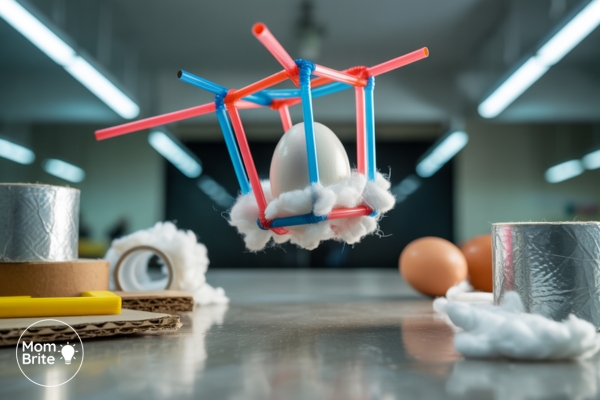
Can you keep a raw egg from breaking when it falls from the sky?
The classic egg drop challenge is one of the most exciting (and slightly messy!) science projects for kids. It combines creativity, physics, and engineering into one hands-on activity that’s perfect for elementary or middle school kids, or anyone who loves a good STEM challenge at home or in class.
Ironically, the egg drop challenge always reminds me of Chicken Little, except this time, it’s not a little chick worried about the sky falling, but us worrying about an egg falling from the sky!
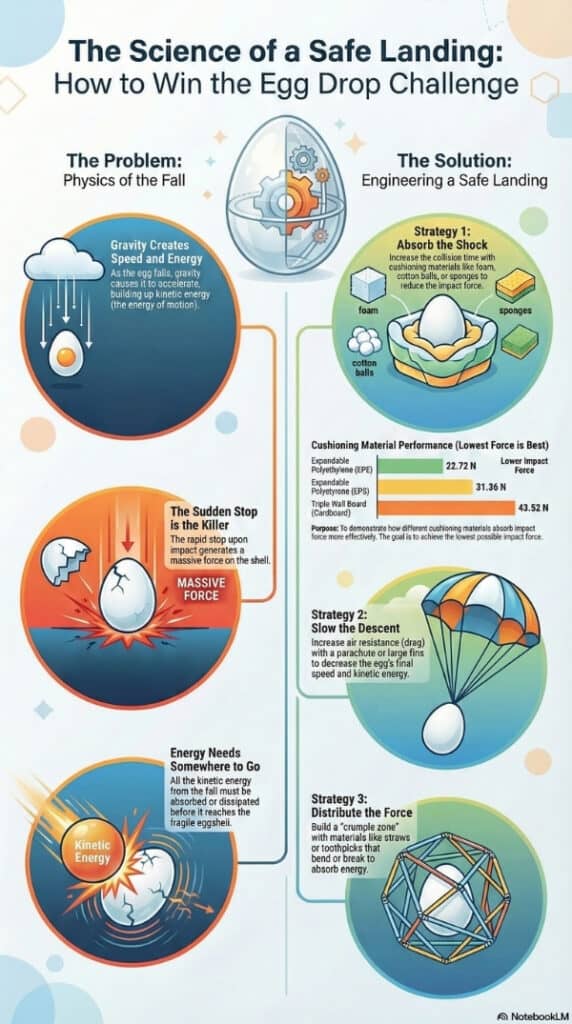
There are countless ways to protect the egg from breaking on impact. The secret lies in understanding the science behind why the egg cracks – and how you can either absorb the impact or slow down its fall.
Kids get to design, build, test, fail (sometimes spectacularly), and try again. The best part? Every crash, splat, and surprise is where the real learning happens.
Grab some eggs… and maybe paper towels. You’re going to need them.
What Is the Egg Drop Challenge?
The egg drop challenge is a STEM activity in which kids design a structure to protect a raw egg from breaking when dropped from a height.
It’s a perfect mix of:
- Engineering
- Physics (gravity + impact)
- Creativity
- Problem-solving
And kids don’t even realize how much they’re learning because they’re too busy asking, “Can we try again?!”
The Science Behind the Egg Drop Challenge
Before building, let’s understand what’s happening when the egg falls.
- Gravity is the force that pulls the egg toward the ground. Once you let go, gravity accelerates the egg downward.
- Force is what causes motion or a change in motion. The ground pushes back on the egg with an equal and opposite force when it lands – and that’s usually what makes it crack!
- Inertia means an object wants to keep doing what it’s doing. The egg wants to stay in motion as it falls, even when its container stops – that’s why it can shatter unless we slow it down gently.
Your goal is to design a container or device that slows the egg’s fall and absorbs the impact so gravity and inertia don’t destroy it.
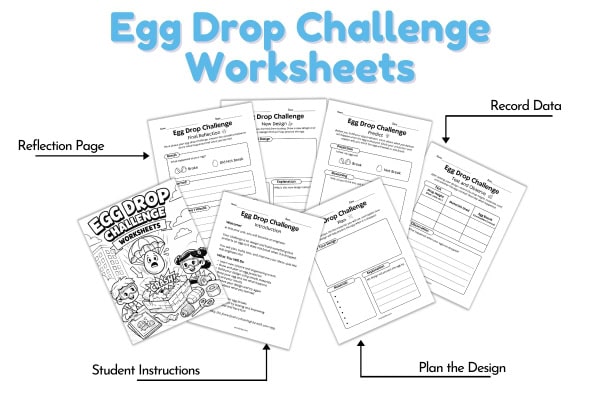
Grab the Egg Drop Challenge Worksheets to get a full set of student-friendly STEM vocabulary that will help kids understand why their designs work (or don’t!).
Egg Drop Challenge Materials
You don’t need anything fancy for this project. In fact, everyday supplies work best. Feel free to mix and match what you have at home or in the classroom supply closet – this challenge encourages creative engineering!
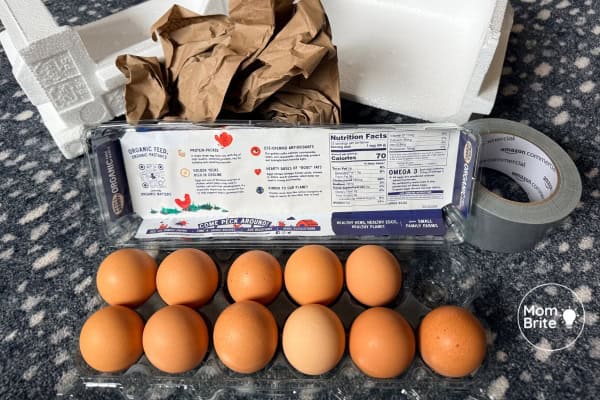
Here are some common materials students have used in past egg drop challenges:
- Raw eggs (extras are highly recommended)
- Straws
- Popsicle sticks
- Cotton balls
- Paper towels
- Recyclable materials (egg cartons, cereal boxes, tissue paper)
- Plastic or paper cups
- String or yarn
- Tape (limit how much they can use!)
- Rubber bands
- Styrofoam
- Bubble wrap
- Plastic bags or parachute material
Optional challenge twist:
Give each group a “budget” (example: only 10 straws, 1 cup, and 12 inches of tape).
How to Run the Egg Drop Challenge (Step-by-Step)
1. Introduce the challenge
Start by clearly explaining the goal: “Your job is to design something that will keep a raw egg from breaking when it’s dropped from a height.” Go over:
- Any rules or limits (time, tape length, number of items, etc.)
- The drop height (start small – you can increase it later)
- The materials they’re allowed to use
2. Review the Egg Drop Challenge Materials
Explain limits clearly. Consider the drop height when deciding on the list of allowed materials.
For younger kids, I suggest laying out all the materials so everyone can see them. Explain:
- What each material might be good for (padding, structure, suspension)
- That using more materials doesn’t always mean a better design
You can ask the students questions like, “Which materials do you think absorb impact the best?” or “Which ones might make the egg fall slower?” to start the thinking process.
3. Plan Before Building
Have the kids draw their design on a piece of paper. Real engineers always plan before building! Some kids might want to skip this step and jump right into building, but it’s an important part of the Engineering Design Process that helps ensure success.
4. Build the structure
Give kids time to:
- Build their design carefully
- Adjust as they go
- Solve problems when something doesn’t work as planned
Encourage teamwork and discussion:
- “What happens if we move the egg to the center?”
- “Is this taped too tightly?”
- “What if we add more cushioning here?”
Try not to jump in with solutions – let them experiment.
5. The Drop Test
Start with a low height, then increase:
- Chair
- Step stool
- Ladder
- Balcony (if safe and supervised)
After each drop:
- Respectfully mourn fallen eggs (maybe hold a mini-service to thank the eggs for their service)
- Inspect the surviving eggs. Some eggs may look intact at first but may have small cracks on close examination.
- Celebrate successes
6. Record Results
Immediately after the challenge, have the kids record:
- Drop height
- Did the egg crack?
- What happened to the structure?
- Any visible damage?
This helps kids connect cause and effect while the experience is fresh.
7. Reflect and Redesign
Ask questions like:
- What worked well?
- What failed?
- What would you change next time?
If time allows, let kids:
- Modify their design
- Try again from the same height
- Test from a higher drop
8: Group Discussion (Optional)
Wrap up with a short discussion:
- Which egg drop challenge designs worked best?
- Did simple designs outperform complex ones?
- How did materials affect the outcome?
This is a great time to highlight simple designs that were successful, where smart material use beats flashy construction.
By slowing down each phase (planning, building, testing, and reflecting), the egg drop challenge becomes more than just dropping eggs. It becomes a full STEM experience kids remember (and talk about) long after cleanup.
To help you successfully run the challenge, I created the Egg Drop Challenge Worksheets to give kids a place to plan their designs, record their results, and improve their ideas, just like real engineers. Check below to check them out:
Egg Drop Challenge Ideas for Different Ages
One of the best things about the egg drop challenge is how easy it is to adapt for different ages. With a few small tweaks to the rules, materials, and expectations, the same activity can work for preschoolers all the way up to middle school.
Preschool–Kindergarten
- Drop from a low height (chair or step stool)
- Focus on padding and cushioning
- Adults are allowed to help with the assembly
Elementary School
- Introduce planning and sketching
- Test from increasing heights
- Compare designs and results
Upper Elementary / Middle School
- Limit materials strictly
- Require a written explanation
- Add weight or size constraints
These egg drop challenge ideas make it easy to adapt the project for anyone you’re working with.
Engineering Tips for the Egg Drop Project
- Balance matters – Uneven designs tend to flip and land harder on one side.
- Use soft materials – They help absorb the energy of the impact.
- Keep it snug – If the egg moves inside, it’s more likely to crack.
- Test step by step – Start low, then increase height.
- Document everything – The best inventors learn from every drop!
Successful Egg Drop Designs to Inspire Your Build
Whether it was my own egg drop challenge back in middle school (let’s not talk about how long ago that was!) or the ones I’ve hosted for my homeschool group, I’ve seen plenty of creative and unique egg drop designs over the years.
If you’re looking for inspiration, here are a few egg drop designs that have proven successful to get you started.
1. The Parachute Capsule
Attach a plastic bag, coffee filter, or tissue parachute to a small container holding your egg. Here is how you can make a DIY parachute for your egg.
Why it works: The parachute increases air resistance, slowing the fall and reducing impact force.
Caution: If you’re doing the egg drop challenge outdoors, the weather can make a big difference in your results. On a windy day, strong gusts can push the parachute sideways, causing the egg to drop faster and hit the ground harder — increasing the chance it will crack.
2. The Cushion Crate
Use a small box or cup lined with bubble wrap, sponge, or cotton balls.
Why it works: The padding absorbs the energy of the landing, protecting the egg inside.
Caution: This design usually works best when dropped from a lower height. Combining several cushioning materials instead of relying on just one often provides better protection for the egg.
3. The Straw Shock Absorber
Inspired by birds, tape straws into a cube or nest shape around the egg.
Why it works: The flexible straw frame evenly distributes the impact, protecting the egg from direct force.
Caution: It can be tricky to balance the design so the egg is evenly protected on all sides. Since straws don’t provide much cushioning on their own, try combining this structure with one of the cushioning designs above — the padding will protect the egg while the straws help absorb the impact.
4. The Balloon Bounce
Surround your egg container with small inflated balloons.
Why it works: Drawing inspiration from real-life applications, balloons act like airbags — they compress on impact, reducing shock.
Caution: Be careful not to inflate the balloons too much — they need enough flexibility to absorb the impact when they hit the ground without popping.
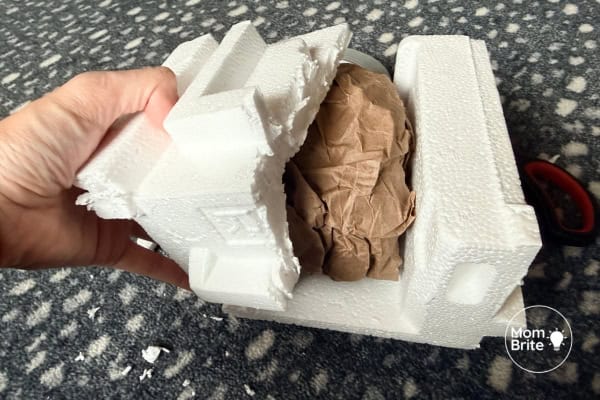
One design that has worked for me again and again, but that I don’t see used very often in egg drop challenges, is using styrofoam and packing materials. Back in engineering school, I lived with a bunch of packaging engineers. So my logic was pretty simple: if these people spend all day figuring out how to stop things from breaking in boxes, I’m not about to argue with them. And honestly? The egg agrees.
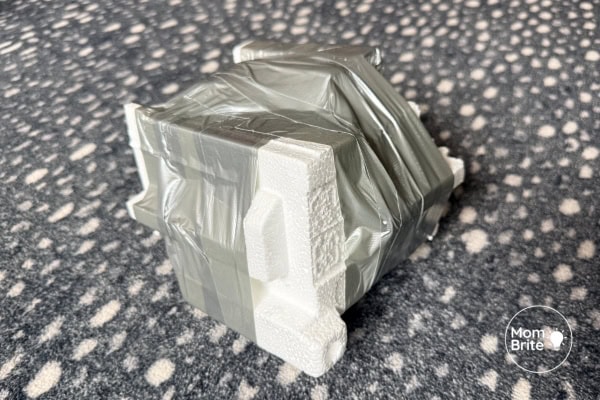
Start by wrapping the egg in packing paper. Then cut the styrofoam so the wrapped egg fits snugly inside. The key here is a tight, cozy fit, so that there is no room for the egg to rattle around.
Next, use duct tape to secure the styrofoam all the way around. Fair warning—this design isn’t exactly a work of art. But it works.
I’ll never forget my own egg drop challenge back in middle school. My teacher dropped my egg from the roof of a two-story building. My styrofoam creation hit the ground, bounced so high it actually flew over my head, then bounced a few more times before finally stopping. Despite the dramatic landing, the egg inside was totally safe and uncracked.
I encourage you to experiment with different combinations. For example, attaching a parachute to a cushioned capsule could be the winning combo you need to protect the egg!
Final Thoughts on the Egg Drop Challenge
The egg drop challenge isn’t just about keeping an egg safe – it’s about understanding how science and creativity work together. With each drop, kids discover how gravity, force, and motion affect everyday objects. Whether you’re a parent guiding a weekend experiment or a teacher leading a classroom challenge, this project will spark curiosity, teamwork, and laughter every time!
YOU MAY LIKE:
How do you properly clean after an unsuccessful drop? What are the steps? What precautions should be taken.
Unfortunately you just need to clean up as if you dropped an egg on a regular day. But I do recommend wrapping the egg in either ziplock bag or plastic cling wrap to minimize the mess.