
Your kids will love this hands-on lung capacity experiment where they get to see how much air their lungs hold by watching water get pushed out of a bottle.
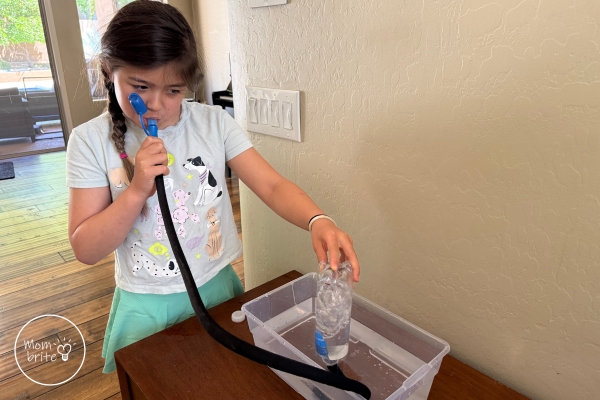
Did you know your lungs have something surprising in common with the sport of tennis? If you could flatten out your lungs completely, they would cover an area the size of a tennis court! Your lungs are truly amazing. They’re the only organs in your body that can actually float on water and contain about 600 million tiny balloon-like structures called alveoli that help you breathe in oxygen.
This simple anatomy science experiment shows your kids exactly how much air their lungs can hold while teaching them incredible facts about these remarkable organs. When your kids blow through a straw in this experiment, they’ll displace water in a container and get to see their actual lung capacity.
This experiment also teaches kids that everyone’s lung capacity is different, based on factors such as age and physical activity level. Regular exercise can actually increase your lung capacity over time!
How to Measure Lung Capacity at Home
Materials:
- A large, see-through plastic bottle (2-3 liter size works best)
- A large bowl or container big enough to hold the bottle
- Water to fill both the bottle and the container
- A flexible plastic tube (about 2 feet long)
- Optional: permanent marker
- Optional: measuring cup
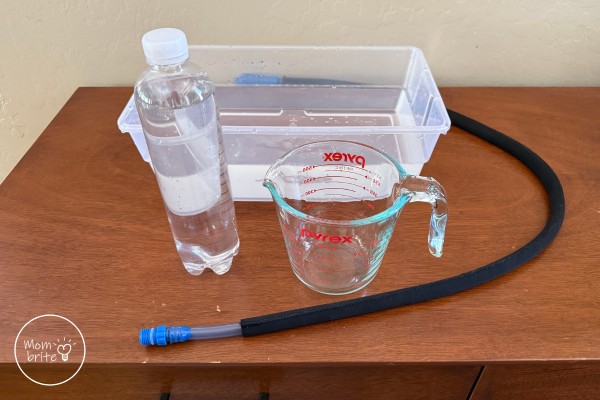
Container size matters here. A standard 2-liter soda bottle works great for most children, but teenagers and adults might need a 3-liter bottle or even a milk jug that holds more than 3 liters (otherwise, you’ll hit the container limit instead of measuring actual lung capacity).
Unfortunately, we didn’t have any 2-liter soda bottles at home, so we used the largest bottle we had. It still worked well to show how much air my daughter’s lungs can hold, but she did end up blowing all the water out of the bottle.
Keep in mind that the average adult lung capacity is approximately 6 liters, although everyone’s results will vary based on age, height, and level of physical activity.
Instructions:
1. Fill your plastic bottle all the way with water and put on the cap.
Optional: Mark the water level with a permanent marker.
2. Fill your container about halfway with water – enough to cover the bottle opening but with room for the water that gets displaced.
3. Here’s the tricky part! Carefully flip the bottle upside down in the container. Place the bottle’s mouth underwater, then remove the cap without lifting the mouth out of the water. The water inside the bottle should remain in the bottle due to air pressure.
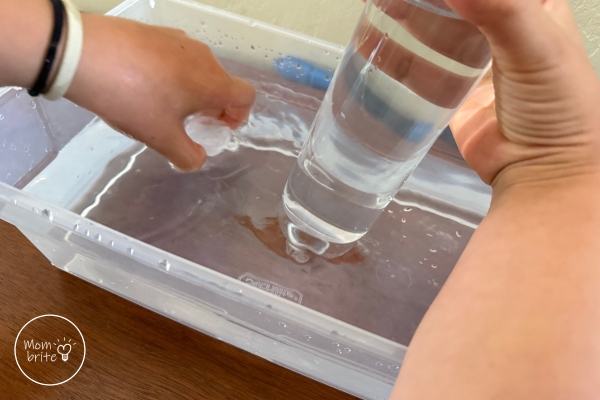
4. Take one end of your plastic tube or straw and carefully slide it into the bottle’s mouth while keeping the opening underwater. The other end of the tube should stay outside the water so you can breathe into it.
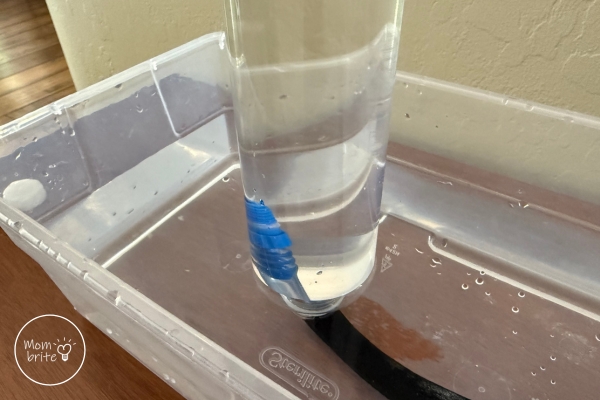
5. Take the deepest breath you can. Put your mouth on the dry end of the tube. Breathe out completely into the tube until you can’t breathe out anymore.
Watch as your breath creates an air pocket at the top of the bottle, causing water to be pushed out.
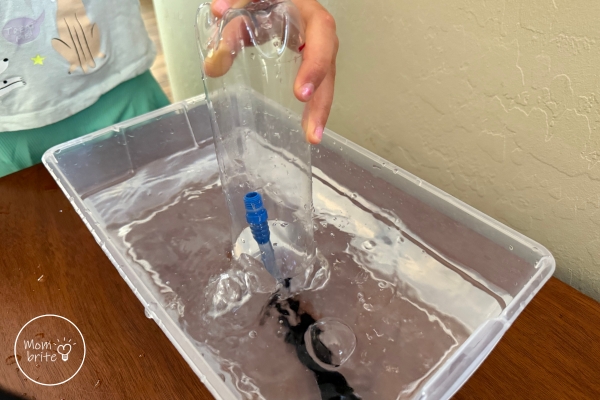
Optional: The air space at the top of the bottle shows your lung capacity. Mark this level on the bottle with your marker. As mentioned above, my daughter ended up blowing all the water out of the bottle, so her lung capacity is even larger than the bottle we used.
6. Lift the bottle from the water and let any extra water drain out.
Optional: Fill the bottle with fresh water up to the marked line, then pour it into your measuring cup. This volume is how much air your lungs can hold.
I recommend repeating this process three times, taking a few minutes’ break between each attempt. Record the highest measurement instead of averaging them. This provides the most accurate result, as lung capacity can vary between attempts.
Interested in learning more about the human body?
Pair this activity with the Human Organs 3-Part Montessori Cards for a visual, hands-on way to reinforce anatomy concepts.
Make It a Real Science Project
Want to take your lung capacity experiment to the next level? You can turn this simple activity into a real science project by following the scientific method.
Start by forming a hypothesis based on what you want to test. For example, you might predict that “people who exercise regularly have greater lung capacity than those who don’t”.
After you decide what you want to investigate, have your kids think about what they expect to happen. This helps them practice the scientific method, just like real scientists do.
Here are some great variables to test:
Exercise: Measure lung capacity before and right after physical activity. Have your kids do jumping jacks or run around outside, then test their lung capacity again. You’ll be surprised at what you discover about how exercise affects breathing!
Age: Test people of different ages to see how lung capacity varies with age. Do younger people have better lung capacity than older folks?
Fitness: Create a simple survey asking about exercise habits before testing lung capacity. Compare the results between active people and those who don’t exercise regularly.
Once you’ve collected all your data, analyze the results to determine if your hypothesis was correct. Ask questions like: Did the numbers match what you expected? What would you do differently next time?
This way, you’ll have turned a fun afternoon activity into a real scientific investigation while learning amazing things about how your respiratory system works.
This fun lung capacity experiment shows your kids that science is everywhere around us. Every time they take a deep breath, they might think about their incredible lungs working hard to keep them healthy.
Whether you keep it simple or turn it into a full science fair project, this activity perfectly combines fun with real learning. Your kids might even get curious about other parts of the human body or want to try more science experiments.
YOU MAY LIKE:
Who knew a soda bottle could reveal my lung prowess? My kids breath turned our kitchen into a splash zone, proving shes got lungs of steel! Science has never been this fun—or this wet!