
Disclosure: This post contains affiliate links. I may earn a small commission at no extra cost to you. Learn more
Here are the step-by-step instructions on how to grow seeds in cotton balls at home. You can do this science experiment any time, and your kids will love watching the seeds go through the plant life cycle. Step-by-step photos, troubleshooting tips, and the science behind it. Perfect for kids ages 5+.
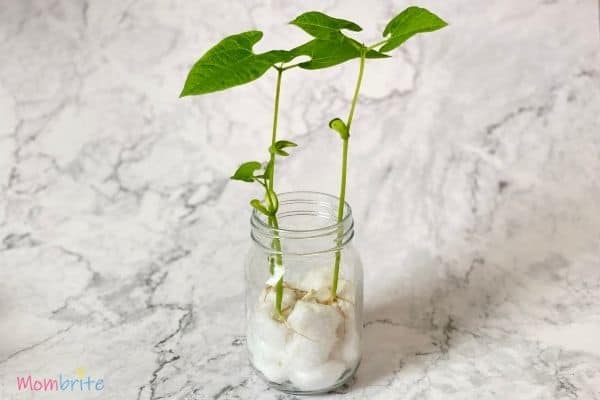
Growing seeds in cotton balls always brings back a fond memory of mine. I remember doing this as part of a science experiment when I was in elementary school, and I just loved watching my bean sprout and grow bigger every day.
Germinating seeds at home is so simple to do. Growing the bean plant in cotton balls in a clear jar allows your kid to see the portion of the bean plant that is normally covered by soil. They can watch the roots grow and dig into the cotton balls. What a great way to demonstrate the life cycle of a plant!
You can use any dried bean you find at the grocery store, but there is a small chance the beans will not germinate and grow. The viability of the beans depends on their age and how they were stored. I didn’t want to risk disappointing my kids, so we ended up purchasing lima bush bean seeds.
Our beans grew beautifully with just cotton and water. Read on to learn how you can do this with your kids or in a preschool or kindergarten classroom.
Why This Works (The Science Part)
Seeds don’t actually need soil to germinate – they just need moisture, oxygen, and warmth. That’s it. Cotton balls are perfect because they hold water without getting waterlogged, which is the same balance seeds need in the ground. Growing in a clear jar instead of soil means your kids get to watch the roots, something that’s normally hidden underground, push out and reach downward in real time.
This is a classic seed germination experiment, and it hits several science concepts kids learn in grades K–5: the plant life cycle, what seeds need to grow, and the difference between germination and growth. If your kids are doing a plant unit or getting ready for a science fair, this is a great hands-on anchor activity.
How to Grow Beans in Cotton Balls
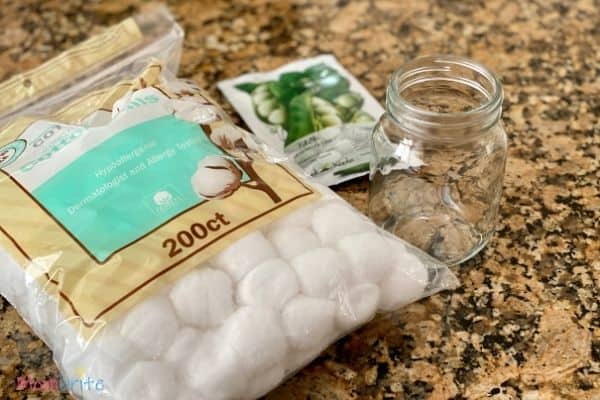
What You Need to Grow Seeds at Home
- Bean seeds
- Cotton balls
- Cup or mason jar
Instructions
Step 1: Prepare the Cotton Balls
Place cotton balls into a clear cup or jar. You can pull the cotton fibers apart slightly to make a nice, soft bed for the seeds. Leave some room on the top to let your bean plant grow, about 1-2 inches.

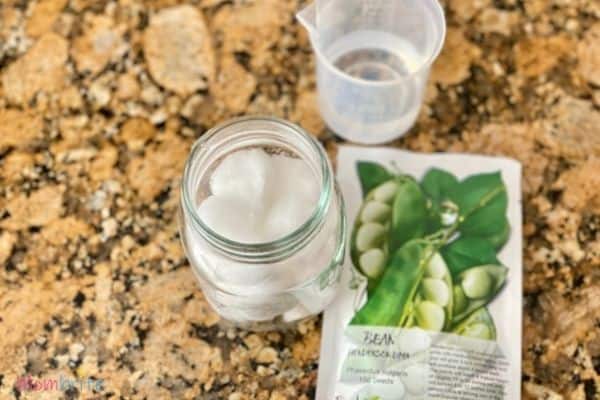
Step 2: Water the Seeds
Water the cotton balls well, but make sure they are not soggy. You should not be soaking the cotton balls. You can use a spray bottle to water the seeds, or, if you don’t have one, simply drip water onto the cotton balls with your fingers.
Step 3: Plant the Seeds
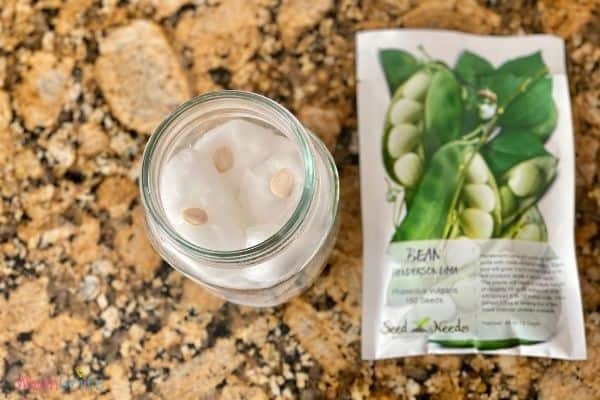
Use your fingertip and make small indentations in the cotton balls, about 1 to 2 inches apart. The larger the seed, the farther apart they should be planted.
Place the seeds in the indentations you made.
Step 4: Seal the Container
If you are using a mason jar, seal the container with a lid. If you are using a cup, cover the opening with clear plastic wrap or a bag. This creates a greenhouse for the beans, ensuring the seeds stay moist and warm.
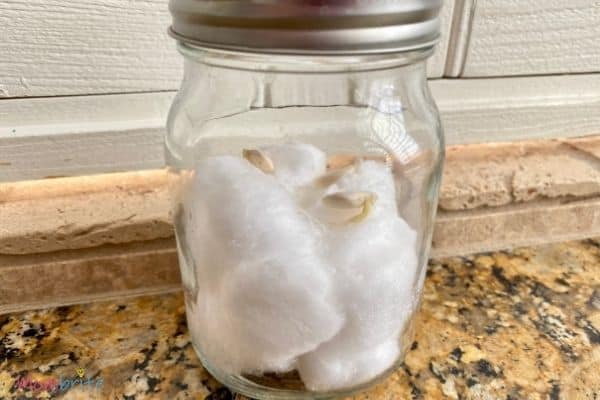
It may take your beans 2-10 days to start growing. These are our beans from when we woke up on the 3rd day. I was relieved to see that the beans had started germinating in the cotton balls!
Step 5: Set the Correct Environment
You should place your jar in a location where the seeds get indirect sunlight during the day. The daytime temperature should be between 68 and 75 degrees Fahrenheit, so just about room temperature.
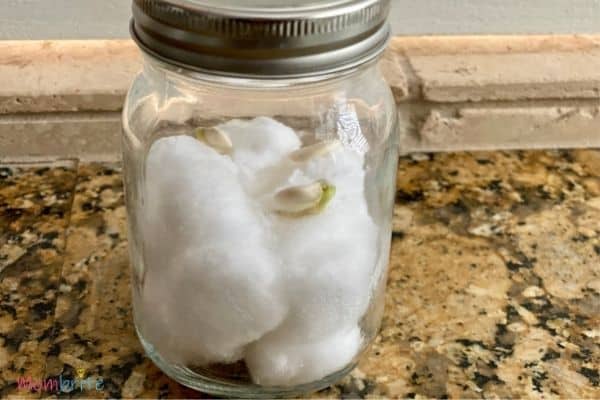
Once the beans germinate, they start growing quite fast. This is our bean plant on the 4th day.
Step 6: Monitor Your Plant’s Growth
The beans started to grow roots on the 5th day. You can also see that the stem has started to grow.
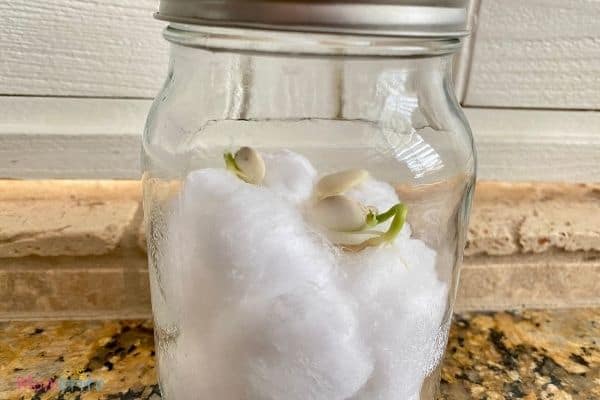
On the 6th day, the stem continued to grow longer.
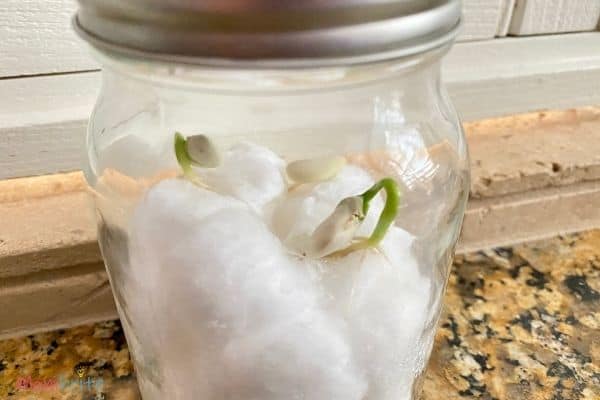
On the 7th day, the bean seed swelled big enough to burst out of the hard outer shell. We opened the lid for a closer look.
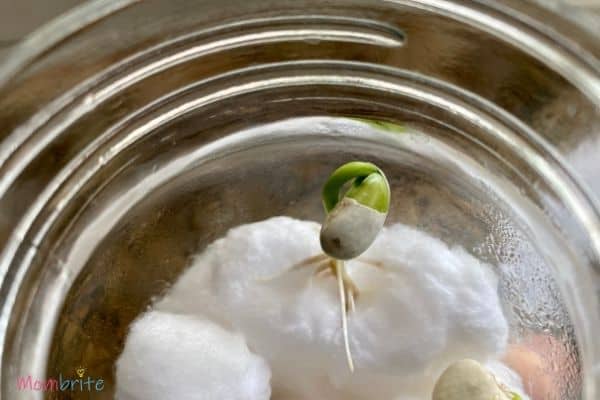
The 8th day was a big surprise! The bean plant had grown so much overnight. At this point, we took off the lid and left it off, as it would hinder the plant’s growth. We had moved on to the next stage of the life cycle of a bean plant – the sprout!
After the lid or plastic wrap comes off, continue watering and keep the cotton balls moist.
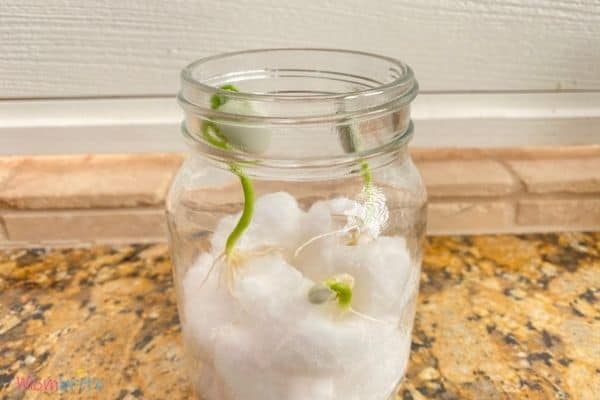
Just hours later, the leaves were starting to make an appearance.
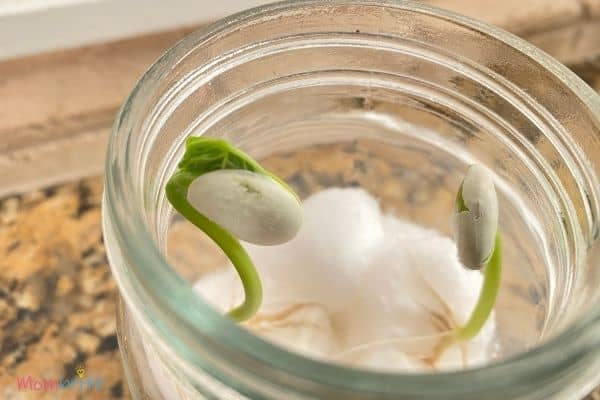
On the 9th day, we also woke up amazed at the bean plant’s growth. One of the bean plant’s leaves had emerged from the seed and was starting to open. Another bean plant’s leaves were just emerging. The stems on the plants straightened out, and the plants were growing upward.
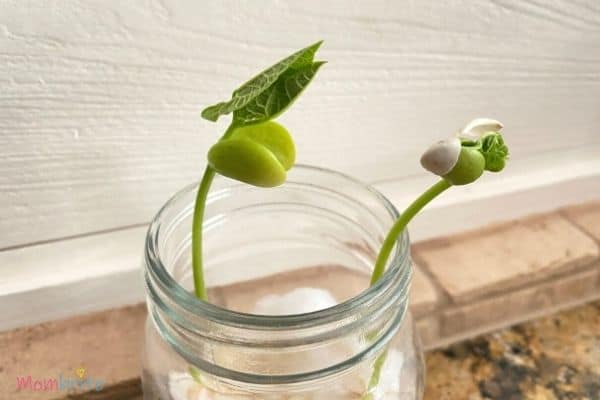
The next day, you can see the leaves on one plant completely opened up. The leaves on the other bean seedling progressed and were slowly emerging from the seed. It was so cool to watch!
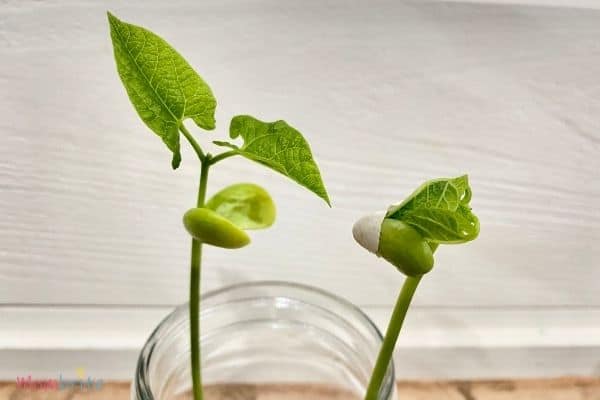
On the 11th day, the leaves had come out of the second bean plant. They were looking so beautiful! I am not sure what happened to the third bean that was in the cotton balls. It had germinated and grown more slowly than the other bean plants.

At this point, we were going to move the seedlings to a pot with soil. However, I wanted to wait for the third bean to sprout.
Two days later, it did! The other two bean seedlings were still growing well, and the third’s leaves had just started to open. All three bean seeds that were planted in cotton balls grew successfully, and the kids were amazed throughout the whole process.
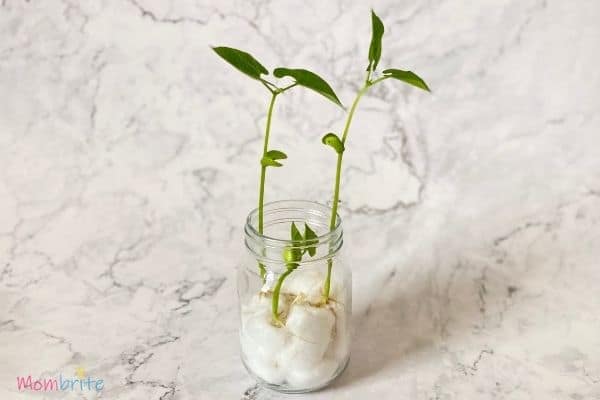
Step 7: Plant the Seedlings in Soil
You can now give your seedling a permanent home by replanting it in soil. You can either plant the seeds in pots or directly in the ground outdoors.
You might have noticed that the roots are quite entangled in the cotton balls. Don’t worry, you can plant the cotton balls along with the seedlings! Simply dig a small hole in the soil, plant the seedlings with the cotton balls, and cover the plants and cotton balls with soil.
If you want to turn this into a full plant unit, our Plant Life Cycle Worksheets are a perfect companion. Kids can fill in what they observe as their seeds grow, and there’s a free download at the bottom of that post.
Grow Seeds in Cotton Balls Experiment Age-Tiered Variations
For preschoolers and kindergartners (ages 3–6):
Keep it simple. One jar, two beans, one job: check the water every morning. Have them draw what the bean looks like each day in a little notebook. They’ll be hooked.
For early elementary (ages 6–9):
Add a second jar as a comparison. One jar goes in the window, one goes in a dark closet. Which beans grow faster? This turns a simple observation into a real experiment with a hypothesis and results. (Spoiler: the answer might surprise you – we tested it and wrote up the full results in our do seeds need light to germinate experiment.)
For older kids (ages 9–12):
Try testing three or four different types of seeds side by side – lima beans, sunflower seeds, lentils, and peas all work. Have them track growth measurements each day and create a simple graph. You can also introduce the vocabulary: radicle, cotyledon, hypocotyl. The science fair judges will be impressed.
Troubleshooting
My seeds aren’t sprouting. What’s wrong?
This is the most common question, and it almost always comes down to one of three things:
The beans are too old. Dried beans from grocery stores can be years old and may not be viable. If you’re doing this for the first time, buy fresh bean seeds from a garden center or Amazon. We used lima bush bean seeds and had a 100% sprout rate.
The cotton balls are too wet or too dry. Soggy cotton balls can rot the seeds. Bone-dry ones don’t provide enough moisture. They should feel like a wrung-out sponge – damp but not dripping.
The temperature is too cold. Seeds need warmth to germinate. Anywhere between 65–75°F is ideal. A cold windowsill in winter can significantly stall germination. Try moving the jar to a warmer spot.
What seeds work best besides beans?
Lima beans are the easiest and most reliable. Sunflower seeds, lentils, and peas also work well. Avoid small seeds like basil or carrots as they’re harder to observe and more likely to overwater.
How long does it take?
Most bean seeds will show their first root within 3–5 days. You’ll see leaves by day 8–11.
Final Thoughts on Growing Beans with Cotton Balls
I hope you and your kids or students have a lot of fun watching the beans go through the plant life cycle. It’s so great to be able to show your kids how plants grow and teach them where their foods come from.
My kids were so interested in the root system and just how much the roots were entangled in the cotton balls. That’s why the plants can stay erect even in strong winds!
For kindergarteners or first graders, you can use this plant science experiment as an opportunity to teach your kids about measurements. Have a recording sheet where the kids can write down how tall the bean plant has grown every day. They can also draw the bean seed’s progress every day next to the height.
If your kids are hooked on watching things grow, we have a whole collection of plant science experiments for kids that pair well with this one, from drip irrigation to seed germination in water beads.
We will continue to take care of the bean plants and hope to eventually be able to eat the beans that they produce!
More Seed Experiments to Try:
- Try this next: Growing Beans in a Bag: Seed Germination Experiment
- More ways to germinate seeds: Seed Germination in a Jar
Thank you so much for such a great interactive activity. I will be using it for my students who have autism. I will do this in preparation for the world Earth day. I would be very grateful if you could please share some of your activities. Many thanks once again.