
Disclosure: This post contains affiliate links. I may earn a small commission at no extra cost to you. Learn more
Learn how to make DIY moon sand with just two simple ingredients! This easy sensory play recipe is perfect for toddlers, preschoolers, and hands-on learning.
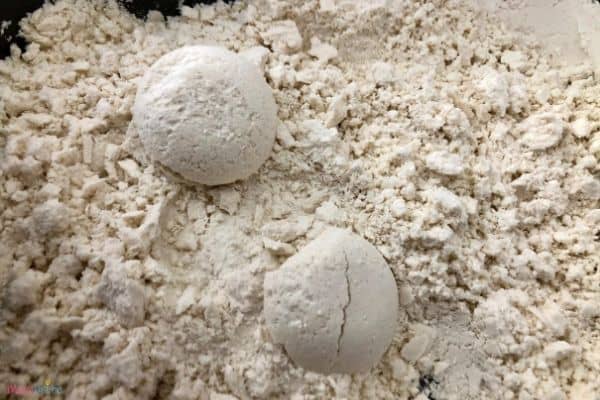
Kids love to play with sand at the beach. But it’s not easy to build a sandcastle out of dry sand! You would need to get buckets of water to make the sand wet enough to hold its shape.
Moon sand gives kids the joy of playing with sand – minus the beach trip. Moon sand is soft, moldable, and never dries out, so kids can press it into molds, build sandcastles, or just let it slowly fall through their fingers.
It’s perfect for toddlers, preschoolers, and curious kids who love sensory play, scooping, squeezing, and creating tiny “moon creations” right at home.
What is Moon Sand?
Moon sand is a soft, crumbly sensory material that feels like damp sand but is much easier to mold and shape. Unlike regular sand, it sticks together when squeezed and falls apart when touched lightly, making it incredibly satisfying for kids to play with.
It’s similar to kinetic sand, but this DIY version is budget-friendly, quick to make, and uses items you likely already have at home.
Moon sand is also sometimes called cloud dough, space sand, or magic sand. It’s called moon sand because it feels like the kind of sand astronauts might walk on when they’re on the moon (called lunar dust). Perfect for space week!
Materials Needed
You only need two ingredients to make moon sand:
Optional: scoops, cups, molds, a large bowl, or a sensory bin for play
How to Make DIY Moon Sand
The ratio to make moon sand is 8 cups of all-purpose flour to 1 cup of oil. Mix them thoroughly using your hands or a spoon until the texture is soft and moldable, and you’ve got yourself moon sand! You can make as much as you want, just make sure to keep the flour-to-oil ratio the same.
If it feels too dry, add a small splash of oil.
If it feels too oily, mix in a little more flour.
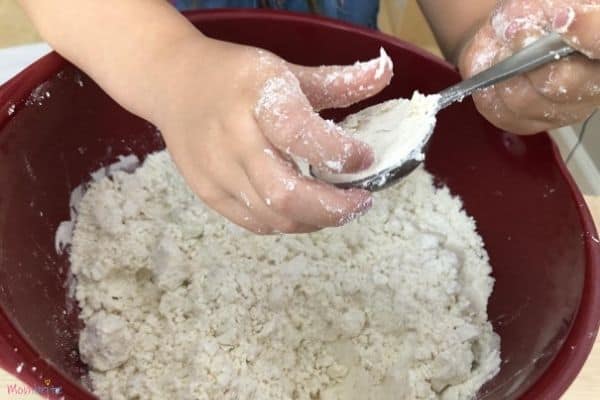
I use baby oil to make the moon sand, but you might want to use vegetable oil if you have toddlers. This way, the sand is perfectly safe if your little one decides to put a handful in his mouth.
You can also add a few drops of food coloring to make moon sand in different colors. However, since water and oil do not mix, you can’t use regular food coloring or liquid watercolors. Try using powdered paint, chalk dust, spices, or oil-based food coloring.
You can even have some aromatherapy going on by adding a couple of drops of essential oils to the moon sand!
How to Play with Moon Sand
If beach sand and playdough had a baby, you would get moon sand. So think about all the ways you would play with sand and playdough, and you can do the same with moon sand!
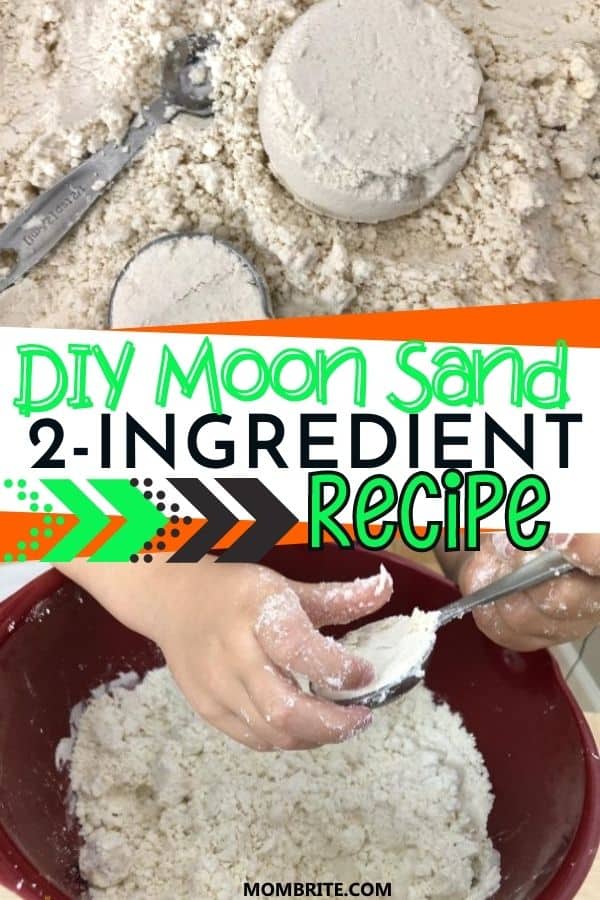
I gave my kids some measuring cups and spoons to scoop and mold the sand. You can use playdough molds, plastic containers, or even gardening tools.
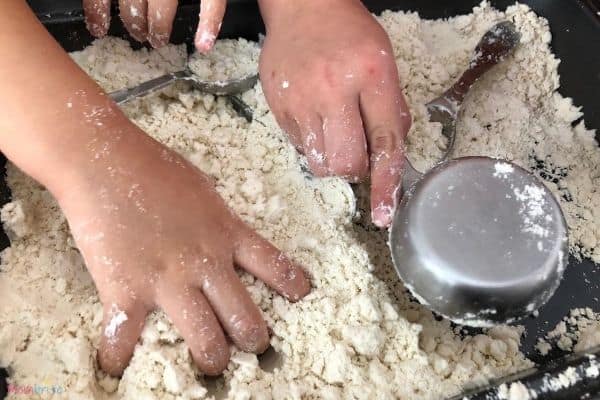
You can squish it in your palms to make balls. There are so many ways to play with moon sand. It’s perfect for independent play and open-ended play for your kids.
For cleanup, wipe surfaces with a damp cloth and wash hands with soap.
Fun Play Ideas for Classroom or Homeschool
- Scoop & Pour Station: Add cups, spoons, funnels, and containers.
- Build & Mold: Use cookie cutters, sand molds, or small cups to create shapes.
- Treasure Dig: Hide small toys and let kids dig them out.
- Moon Base Play: Add toy astronauts, blocks, or recycled boxes for pretend play.
- Free Sensory Exploration: Let kids squeeze, crumble, and explore freely.
Moon Sand Storage
Moon sand will be good for a month or two when stored properly. Store your moon sand in an airtight container in a cool, dry place.
Moon Sand vs. Kinetic Sand
If your kids have played with kinetic sand before, you might be thinking that this 2-ingredient moon sand looks very similar to the kinetic sand you have seen in stores.
There are two significant differences between moon sand and kinetic sand:
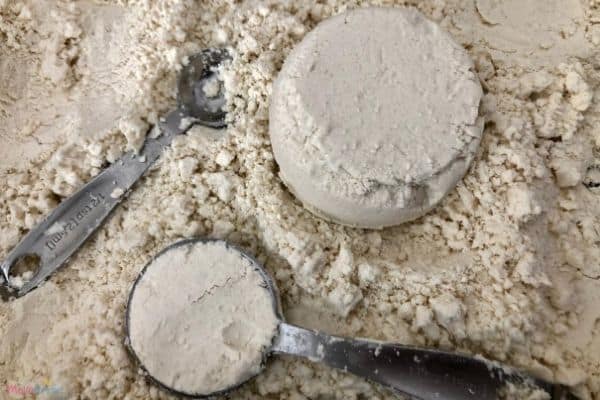
- Kinetic sand is simply regular sand that has been coated with silicon oil. Its texture is more silky, whereas moon sand feels more crumbly.
- When you build with kinetic sand, you will find that the structure starts to fall apart within seconds. With moon sand, the structure will stay intact.
Conclusion
I hope your kids enjoyed moon sand as much as mine did! You can buy kinetic sand in stores like Target or Walmart, but as you can see, making it at home is so easy.
Moon sand is usually geared towards toddlers, but my 4 and 6-year-olds loved playing with it as well. If it wasn’t for dinner, they could have played with it for hours!
YOU MAY LIKE:
would this be messy in a classroom?
Honestly, it depends on the age of your students. The moon sand is not too powdery so it doesn’t get everywhere just from handling it in a container, but if you have kids who might throw it then it could get pretty messy!