
Heat a soda can, flip it into cold water, and watch it implode instantly. This can crush experiment teaches air pressure in the most dramatic way possible.

My kids have seen a lot of science experiments at this point. They’re not easily impressed anymore. But when I flipped that heated soda can into the ice water, and it collapsed with a loud pop, my daughter screamed, and my son immediately said, “Do it again.”
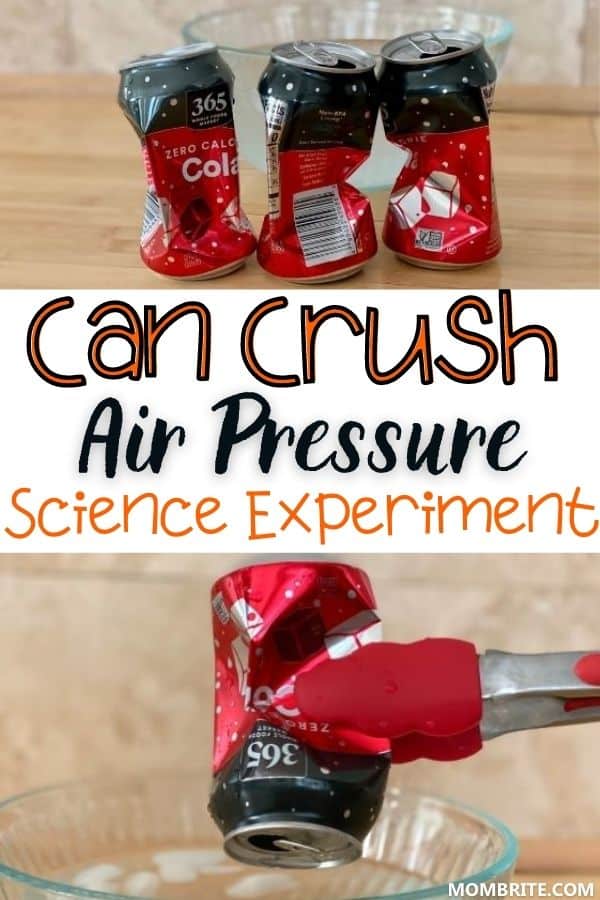
That’s the can crush experiment. It takes about five minutes, uses supplies you already have, and produces one of the most dramatic results of any experiment we’ve tried. The can doesn’t just bend – it implodes.
Here’s exactly how to do it, why it works, and what to do if your can isn’t crushing.
Adult supervision required. This experiment involves a hot stovetop and a very hot can. Kids should watch from a safe distance while an adult handles the can.
How to Crush a Can with Air Pressure
Materials:
- Empty soda cans (grab a few – you’ll want to do this more than once)
- Water
- Ice
- Bowl
- Tongs
- Stove or hot plate
Instructions:
1. Rinse the inside of the cans.
2. Fill the bowl with cold water and add ice.
3. Add about a tablespoon of water to the can.
4. Place the can on the stovetop over medium-high heat. Wait until the water inside boils – you’ll hear it bubbling and see steam rising from the opening.
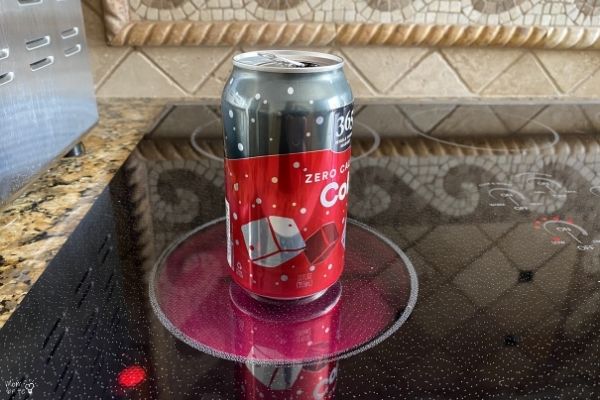
5. Using tongs, grip the can near the bottom with your palm facing up. Move quickly: flip the can upside down and plunge it into the ice water in one smooth motion.
6. Watch what happens.
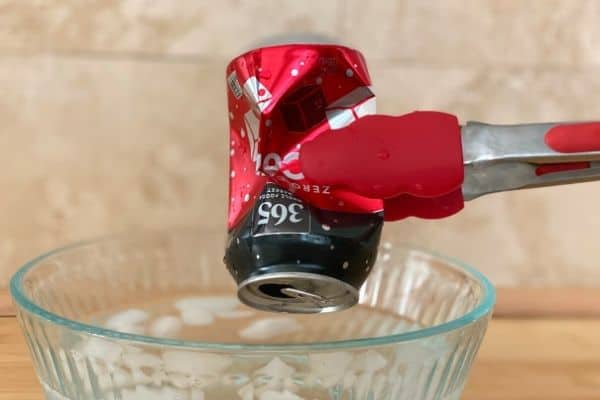
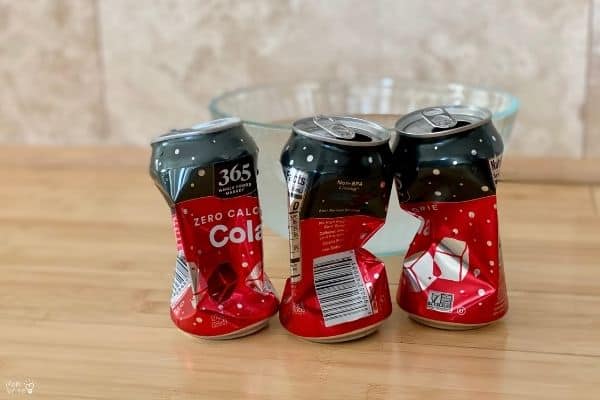
The can will implode with a loud pop almost instantly. If you’re anything like me, you’ll jump even though you know it’s coming.
Troubleshooting: If Your Can Isn’t Crushing
The first time we tried this, nothing happened… three times in a row. Here’s what we figured out:
- Make sure the water is actually boiling. You should hear bubbling, not just see steam. Steam alone isn’t enough.
- Keep the can straight. When you flip it into the water, hold it perfectly upside down. If it goes in at an angle, cold water enters through the opening before the can has a chance to implode.
- Move fast. Waiting even a few seconds after removing the can from the heat lets steam escape and cool air creep back in. The flip needs to happen immediately.
- Repeat attempts: If the can still doesn’t crush on the second try, you’re probably not heating the water hot enough or moving too slowly.
Why Does the Can Crush in the Experiment?
When you heat the water inside the soda can, it turns into steam, or water vapor, which fills the can and pushes the air out through the opening. By the time the can is steaming, the inside is almost entirely water vapor, with very little air remaining.
The moment you flip the can into the cold water, two things happen at once. The cold water seals the opening so no outside air can get in. And the steam rapidly cools and condenses back into liquid water, a tiny amount that takes up almost no space.
Suddenly, the inside of the can has very little air and even less vapor. The pressure inside drops dramatically. But the air pressure outside the can stays the same, pressing in on all sides with the weight of the atmosphere behind it.
That pressure difference is what crushes the can. It’s not a hand or a foot doing the work – it’s the air all around us, pushing inward the instant the pressure inside can’t match it.
If you want to see the same principle with a less dramatic result, the burning candle in water experiment shows air pressure pushing water into a glass using the same cooling-and-contracting process.
Can Crush Experiment Science Extensions
Once your kid has seen it once, they’ll start asking questions. Lean into that:
- Does the temperature of the ice water matter? Try room temperature water instead and compare.
- Does can size matter? If you can find a larger can, test whether it crushes the same way.
- What happens if you don’t flip the can upside down – does it still crush?
- Can you time how long it takes from the moment the can hits the water to the moment it implodes?
For more air pressure experiments that use the same concept in different ways, try the balloon in a jar experiment or the hot and cold balloon experiment.
Can Crush Experiment Lab Sheets
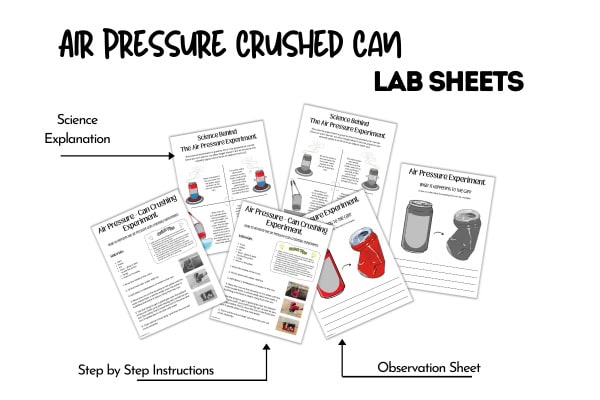
If you’re doing this in a classroom or want your kids to record their observations properly, we made lab sheets specifically for this experiment.
They walk students through making a hypothesis, recording what they observe during each stage, and writing a conclusion based on what happened. There’s also a science explanation section and both color and black-and-white print options.
They’re designed for ages 11-18, so they work well for middle and high school students who are ready to go deeper than just watching the can implode.
What’s Included:
- Teacher Instructions: Your roadmap to experiment success
- Science Explanations: Clear, concise breakdowns of the underlying principles
- Observation Sheets: Where young scientists record their groundbreaking findings
- Bonus: Both color and black-and-white printing options are available!
Click the image below to grab the printable set of air-pressure-crushed-can experiment worksheets now!
Final Thoughts
This is one of those experiments I keep coming back to because the reaction is so immediate and so loud. There’s no waiting for mold to grow or beans to sprout. You heat the can, you flip it, and something dramatic happens in under a second.
If you try it, I’d love to know how it goes, especially whether you managed not to jump when it popped. I’ve done this experiment a handful of times now and I still haven’t managed it.
Looking for more physics experiments with a big reaction? Check out our full list of easy science experiments for kids at home.
YOU MAY ALSO LIKE:
- Balloon in a Jar Air Pressure Experiment
- Hot and Cold Balloon Science Experiment for Kids
- Burning Candle in Water Experiment
nice ! 🙂
nice i used it for my project ! :3
i used this for my project
Cool Experiment is a great idea for a science project .
Amazing to watch and highly effective in wowing the children.
This is so cool. I am gona use this for sure! Thank u.